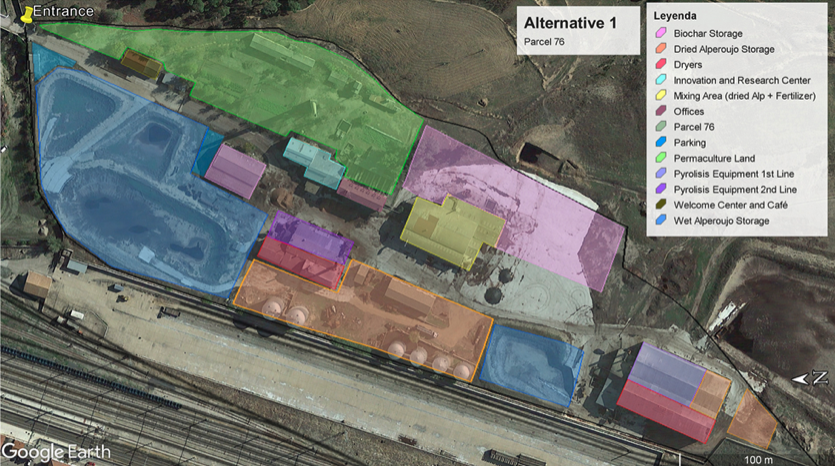

We developed the strategy and vision for Amata Green, a U.S. company that aims to produce 9,000 metric tons of biochar per year.
The project includes the design of alternatives and a feasibility study for a regenerative building that will serve as both a headquarters and a biochar production facility. This work led to Amata being selected for a major incubation program to secure funding.
The main objectives of the preliminary design report included:
- Project Vision and Preliminary Systemic Design
- Feasibility of Design Alternatives
- Restoring Soil Vitality
- Enable toxin-free organic farming
- Supporting the green transition in southern Spain
This preliminary design utilized the 4 Returns Framework to create a systemic design that would generate returns in terms of environmental impact, social impact, financial returns, and inspiration.

NATURAL RETURN
Restore and conserve biodiversity to achieve healthy and resilient landscapes and ecosystems, for both humans and non-humans. This includes all aspects of nature.

RETURN OF INSPIRATION
To promote, inspire, and facilitate fully organic farming practices in southern Spain. To become a model project that fosters hope and purpose.

SOCIAL IMPACT AND ACTING WITH INTEGRITY
Consider the long-term impact on job creation, education, and social connections. Integrate into broader systems of life to play a key role in reversing the effects of climate change.

FINANCIAL RETURN
To generate long-term, sustainable, and circular revenue for the project and the communities at large, including all life support systems.
AGRICULTURE
Biochar is inoculated and buried in the soil near the root zone. It creates a space for beneficial microbes to grow and thrive, regenerating the soil and creating better growing conditions and healthier crops.
GARDENING, HOME, AND WELL-BEING
Biochar is also used in gardening to improve soil quality, reduce toxins and odors in the home, and for air and water filtration.
CONSTRUCTION
Biochar is mixed as an aggregate with other materials or used as an additive in the creation of recyclable bioplastics, such as the material developed by Made of Air: a material that stores “about two metric tons of carbon dioxide equivalent for every metric ton of plastic.”
ANIMAL
WELFARE Biochar is used as a supplement in animal feed, which reduces methane emissions from ruminants and lowers mortality rates.
We also work on the following Sustainable Development Goals:
7 AFFORDABLE AND CLEAN ENERGY
Ensure access to affordable, reliable, sustainable, and modern energy for all. Amata Green’s biochar production process utilizes excess gas and energy from the production process: The equipment recovers excess heat and uses it to dry materials and heat other areas of the facility, as well as neighboring properties.
9 INDUSTRY, INNOVATION, AND INFRASTRUCTURE
Build resilient infrastructure, promote inclusive and sustainable industrialization, and foster innovation. Amata Green will be the first pyrolysis-based biochar production facility in the Spanish province of Andalusia. The research initiative focuses on producing higher-quality biochar.
12 RESPONSIBLE CONSUMPTION AND PRODUCTION
Ensure sustainable consumption and production patterns. The process will use green “waste” or biomass derived from the production of olive oil and other olive-based products, and never from biomass plantations or forests.
13 CLIMATE ACTION
Take urgent action to combat climate change and its effects. Amata Green’s biochar production process utilizes excess energy: The equipment recovers excess heat and uses it to dry and heat other areas of the facility. Biochar actively sequesters carbon.
15 LIFE ON LAND
Protect, restore, and promote the sustainable use of terrestrial ecosystems; sustainably manage forests; combat desertification; halt and reverse land degradation; and halt biodiversity loss. When used in agriculture, biochar reduces erosion, decreases pollution in waterways, prevents the depletion of aquifers, reduces soil salinity, increases soil microbial activity, and boosts farmers’ productivity. AG also plans to restore habitats for biodiversity at its sites.
Designing from a systemic perspective:
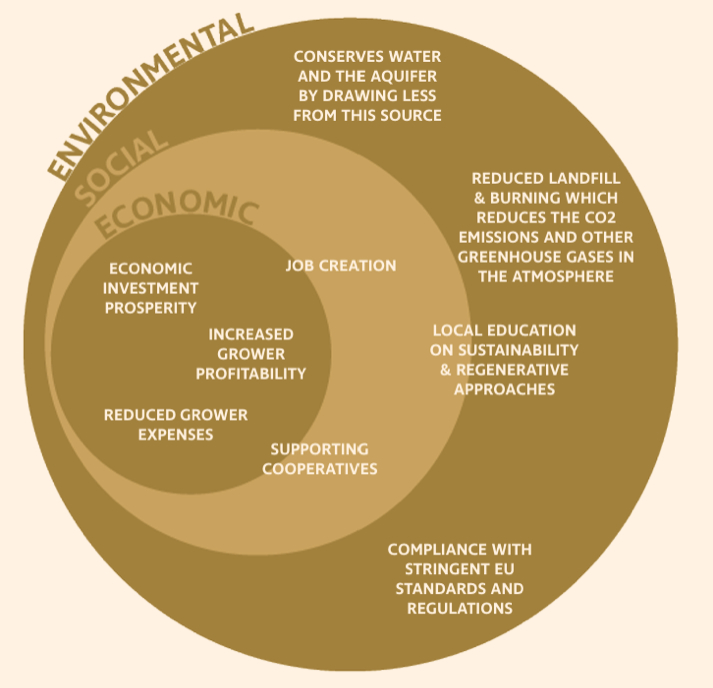
It was designed based on the principles of multifunctionality and interconnection among the system's components, to create closed systems that support one another:
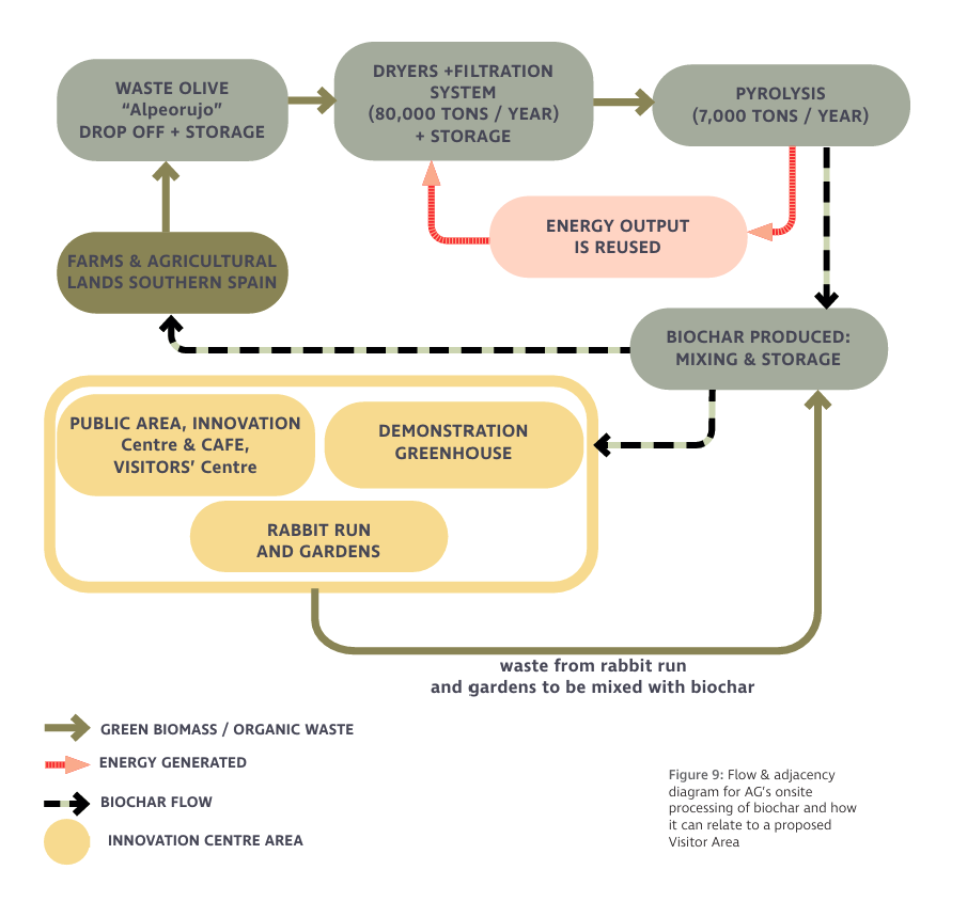
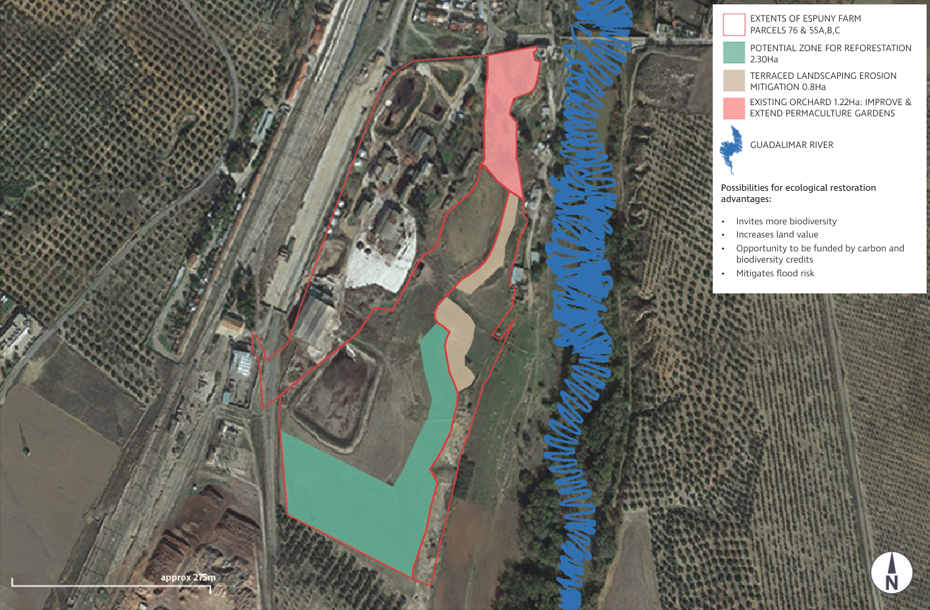
Implementing zone design based on permaculture principles: